


Take VR journeys through the TRAPPIST-1 system of exoplanets and to NASA’s Spitzer Space telescope, which played a key role in their discovery.
Developed in Unity.
NASA
2021
Lead Developer


The Deep Synoptic Array (DSA) will be a world-leading radio survey telescope. The array will consist of of 1650 dishes spanning an area of 20 km × 16 km in a radio-quiet valley in Nevada.
This 360 animation focuses on one dish, showcasing a photorealistic perspective of the site.
Created in Blender.
Schmidt Sciences
2026
Animator
360 animation of planet artwork developed for JPL press release:
https://science.nasa.gov/universe/exoplanets/discovery-alert-an-ice-cold-earth/
A candidate planet that might be remarkably similar to Earth, HD 137010 b, has one potentially big difference: It could be colder than perpetually frozen Mars.
Created in Blender.
NASA
2026
Artist/Animator
Watch as the complex reproduction cycle of the sea nettle jellyfish takes form.
Animation produced in Blender. Composited in After Effects.
Aquarium of the Pacific
2015
Animator
See the inner workings of how a jellyfish attacks prey and defends itself from predators.
Animation produced in Blender. Composited in After Effects.
Aquarium of the Pacific
2015
Animator
Animation created for Caltech press release about a two-faced star.
https://www.caltech.edu/about/news/two-faced-star-exposed
In a first for white dwarfs, the burnt-out cores of dead stars, astronomers have discovered that at least one member of this cosmic family is two faced. One side of the white dwarf is composed of hydrogen, while the other is made up of helium.
Produced in Blender.
Highlighted in the following articles:
CNN | BBC | The New York Times
Caltech
2023
Animator
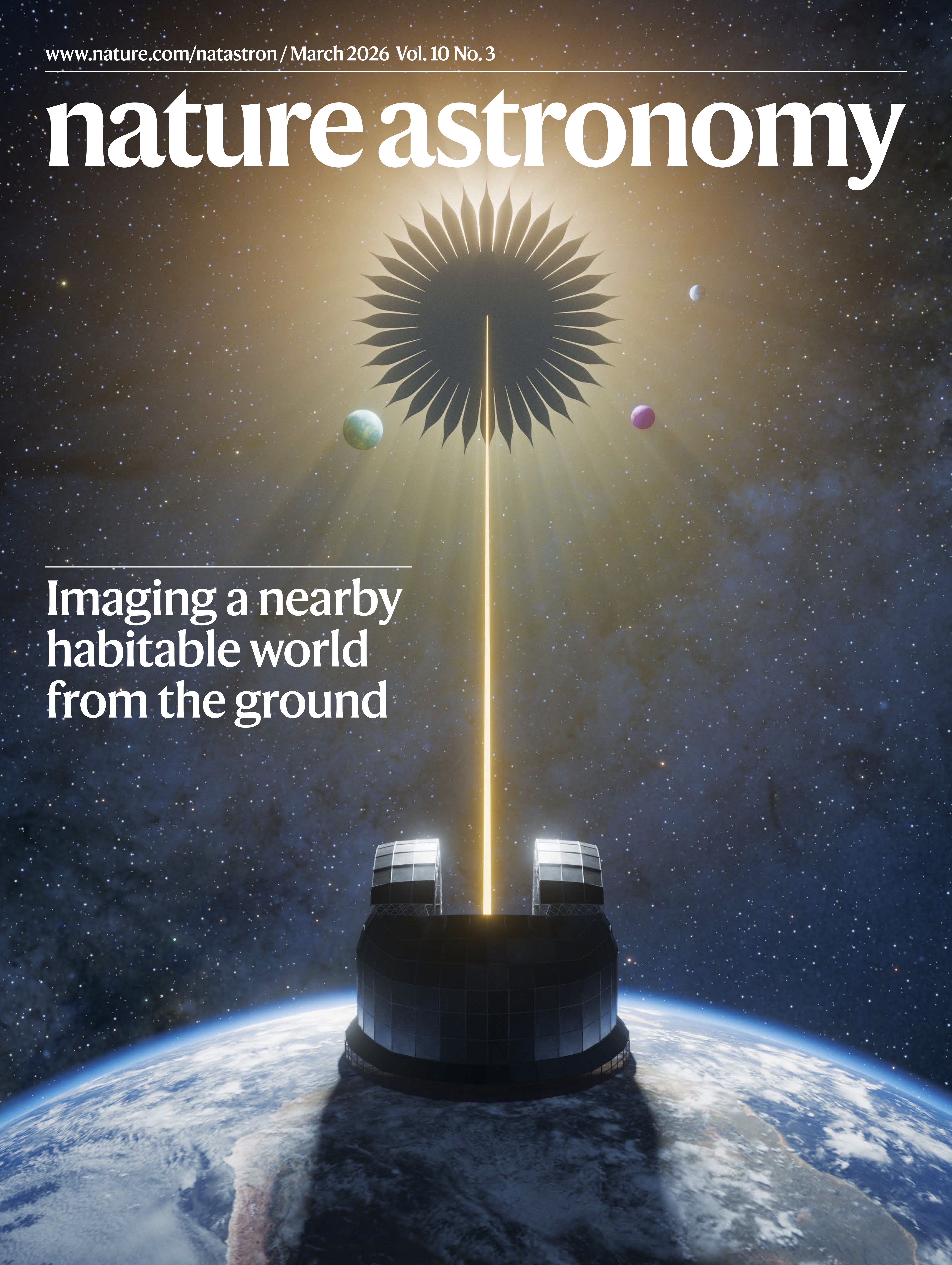

Artwork created for the cover of Nature Astronomy journal.
https://www.nature.com/natastron/volumes/10/issues/3
Artwork created in Photoshop and Blender.
Nature, Keck Institute of Space Studies
2026
Artist

Artwork created for the cover of Nature magazine and Caltech press release.
https://www.nature.com/nature/volumes/617/issues/7959
Caltech Story
https://www.caltech.edu/about/news/star-eats-planet-brightens-dramatically
Artwork created in Photoshop and Blender.
Highlighted in the following articles:
Wall Street Journal | Washington Post | NPR
Nature
2023
Artist


Official artwork created for a NASA exomoon press release.
https://www.nasa.gov/universe/exoplanets/does-distant-planet-host-volcanic-moon-like-jupiters-io/
New research done at NASA’s Jet Propulsion Laboratory reveals potential signs of a rocky, volcanic moon orbiting an exoplanet 635 light-years from Earth.
Artwork created in Blender and Photoshop.
Highlighted in the following articles:
The New York Times | Space.com
NASA
2024
Artist
Artwork created for the cover of Nature magazine and Caltech press release.
https://www.nature.com/nature/volumes/617/issues/7959
Caltech Story
https://www.caltech.edu/about/news/star-eats-planet-brightens-dramatically
Artwork created in Photoshop and Blender.
Highlighted in the following articles:
Wall Street Journal | Washington Post | NPR
Nature, Caltech
2023
Artist


Official artwork created for the NASA 5,000 Exoplanet press release.
Featured on NASA's homepage:
https://www.nasa.gov/feature/jpl/cosmic-milestone-nasa-confirms-5000-exoplanets/
Artwork created in Photoshop and Blender.
Highlighted in the following articles:
CNN | Space.com | Forbes
NASA
2022
Artist, Graphic Designer

Official NASA artwork designed for NASA's Spitzer Space Telescope Final Voyage promotion.
Graphics designed in Illustrator.
NASA
2020
Artist, Illustrator
The Deep Synoptic Array (DSA) will be a world-leading radio survey telescope. The array will consist of of 1650 dishes spanning an area of 20 km × 16 km in a radio-quiet valley in Nevada.
This 360 animation focuses on one dish, showcasing a photorealistic perspective of the site.
Created in Blender.
Schmidt Sciences
2026
Animator
360 animation of planet artwork developed for JPL press release:
https://science.nasa.gov/universe/exoplanets/discovery-alert-an-ice-cold-earth/
A candidate planet that might be remarkably similar to Earth, HD 137010 b, has one potentially big difference: It could be colder than perpetually frozen Mars.
Created in Blender.
NASA
2026
Artist/Animator
Watch as the complex reproduction cycle of the sea nettle jellyfish takes form.
Animation produced in Blender. Composited in After Effects.
Aquarium of the Pacific
2015
Animator
See the inner workings of how a jellyfish attacks prey and defends itself from predators.
Animation produced in Blender. Composited in After Effects.
Aquarium of the Pacific
2015
Animator
Animation created for Caltech press release about a two-faced star.
https://www.caltech.edu/about/news/two-faced-star-exposed
In a first for white dwarfs, the burnt-out cores of dead stars, astronomers have discovered that at least one member of this cosmic family is two faced. One side of the white dwarf is composed of hydrogen, while the other is made up of helium.
Produced in Blender.
Highlighted in the following articles:
CNN | BBC | The New York Times
Caltech
2023
Animator


